
Measured, audited,
and honest about
the gaps.
Our environmental work sits under Vision 2027, our roadmap as a responsible corporate citizen. Carbon reporting is prepared independently, waste is audited regularly, and every employee is trained in sustainability practice. We report the numbers that come out of those processes rather than internal estimates.
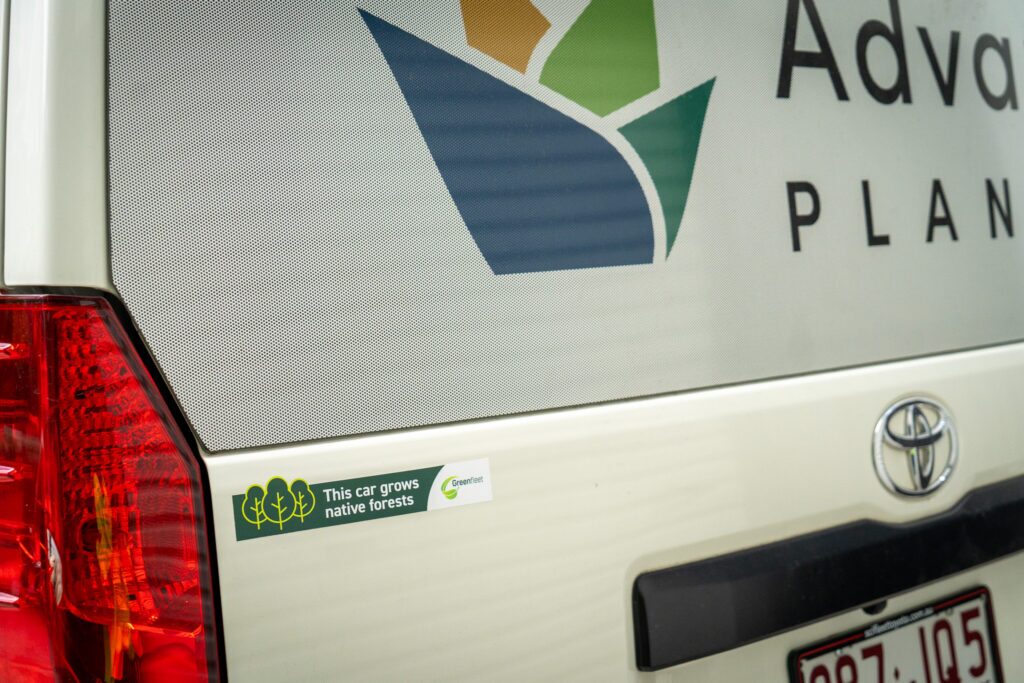
85.0 tonnes of carbon offset through native reforestation
Offset with Greenfleet, a not-for-profit environmental organisation that restores native forests which are legally protected for up to 100 years. Offsetting is reported separately from measured emissions reduction so the two are never conflated—it addresses residual emissions while lower-emission vehicles are phased in.
A net exporter of solar energy to the grid
On-site solar covers more than 80 per cent of daytime electricity use at Albion, and across the year the site exports more clean energy to the grid than it draws from it. Battery-powered tools have progressively replaced petrol equipment across the operation.
Green Building Council of Australia member
Green Star is the rating system most of our commercial clients build and fit out against, and membership keeps us close to how the standard is changing.
Every black nursery pot is recovered for recycling
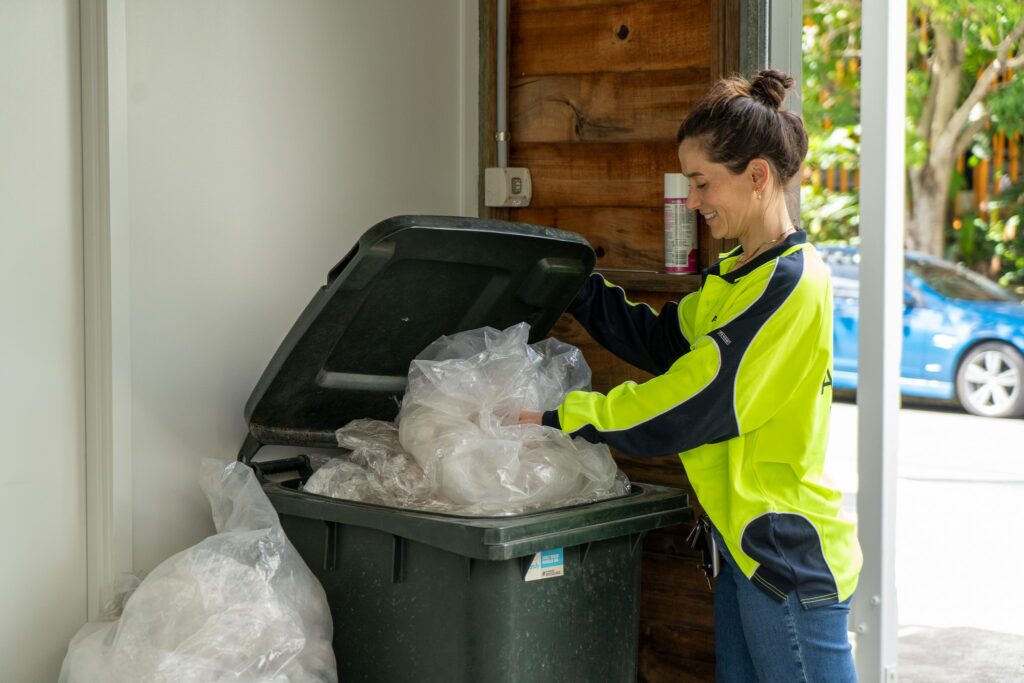
Collected through PP5. The bark mulch we use across installations is recycled; decorative stone and pebbles are not, and we don’t claim otherwise. Decorative pots are resprayed and reused rather than replaced. Potting mix, stones and pebbles are recovered and reused between installations. Green waste is mulched rather than sent to landfill, soft plastics are diverted through ResMart, and retired uniforms are recycled rather than binned.
73.3 per cent of our waste diverted from landfill
Measured in FY26, with waste audited independently on a regular basis. We work to the 7Rs—rethink, refuse, reduce, reuse, repair, regift, recycle—and we are targeting 75 per cent diversion by 2027. Every employee completes sustainability training through our learning platform, which means the practices described here are understood by the technicians who carry them out rather than held only at management level.
Net zero operational emissions by 2035
Vehicle movement is the largest remaining source of operational emissions for a business servicing more than 300 sites. GPS route optimisation across the fleet means fewer kilometres driven for the same number of services. The fleet transition remains the largest single obstacle between current operations and the target, and we say so.
Office energy use down 48 per cent
Measured since the Albion solar array was installed in 2024. It is a reduction in energy drawn, not a claim about total emissions, and we keep the two figures apart.
On circularity, precisely
Plant hire is inherently circular. Nothing is sold and consumed: the plants and the containers stay ours, they come back to us, and they go out again. Pots are resprayed and returned to service, and potting media, stones and pebbles are recovered between installations. In FY26 we resprayed 55 decorative pots rather than replacing them.
The commercial model points the same way. Replacements are included in our maintenance contracts, so every plant that fails is our cost, not the client’s. That makes longevity the thing we are paid to protect: the right species for the light, the right soil, water delivered accurately, stock sourced close by so it arrives healthy. A business that charged for each replacement would have every reason to let plants struggle. We have every reason not to.
It is also why our recommendations to clients tend toward the more sustainable option even when the specification says otherwise—recycled bark mulch instead of imported pebble, for instance, because it holds moisture and the planting lives longer. The sustainable choice and the durable one are usually the same choice.
Not all of it is a clean loop. A proportion of returned plants cannot be reused and goes to green waste, which is mulched rather than sent to landfill. We would rather describe it that way than round it up.
Responsible sourcing
Sourcing from local nurseries keeps transport short and reduces the losses associated with moving live stock long distances. Where a product cannot be sourced locally we look for Australian made. In cost-sensitive projects we use seconds-grade plants, which are healthy specimens that fail cosmetic grading and would otherwise be discarded, and which perform identically once installed.
We also recommend recycled bark mulch in place of stone or pebbles even where a specification calls for stone, because it is better for plant health and a substantially more sustainable material.