Trying to describe the look you want for your office plants and landing on “you know, green, but nice”? You are not alone. Most briefs we receive start exactly there, and that is fine, because turning “green but nice” into a planting plan is our designers’ favourite part of the job.
A few years ago we wrote about 8 popular plant themes, and it is still one of our most-read articles. Reading it back, though, it is really a garden list. Coastal, edible and English cottage are gorgeous on a rooftop or in a courtyard, but nobody has ever asked us for an English cottage reception on level 14 (and if you do, we are up for it, though the peonies will not be).
So, with help from Meriel and our design team, here is the indoor version: the six looks that come up most often in our corporate briefs across Brisbane, the Gold Coast and the Sunshine Coast, which plants we reach for to build each one, and the handful of things about your room that might change the species we choose.
One thing before we start. A theme is a starting point, not a shopping list. Every indoor plant has a light range it will tolerate, and the biggest favour our designers do you is quietly swapping a species within your theme so it actually thrives where you put it. If you have fallen in love with a particular plant, say so and we will find it the best spot we can. We will also tell you plainly if that spot is a 60-day-guarantee-tester.
1. Tropical oasis
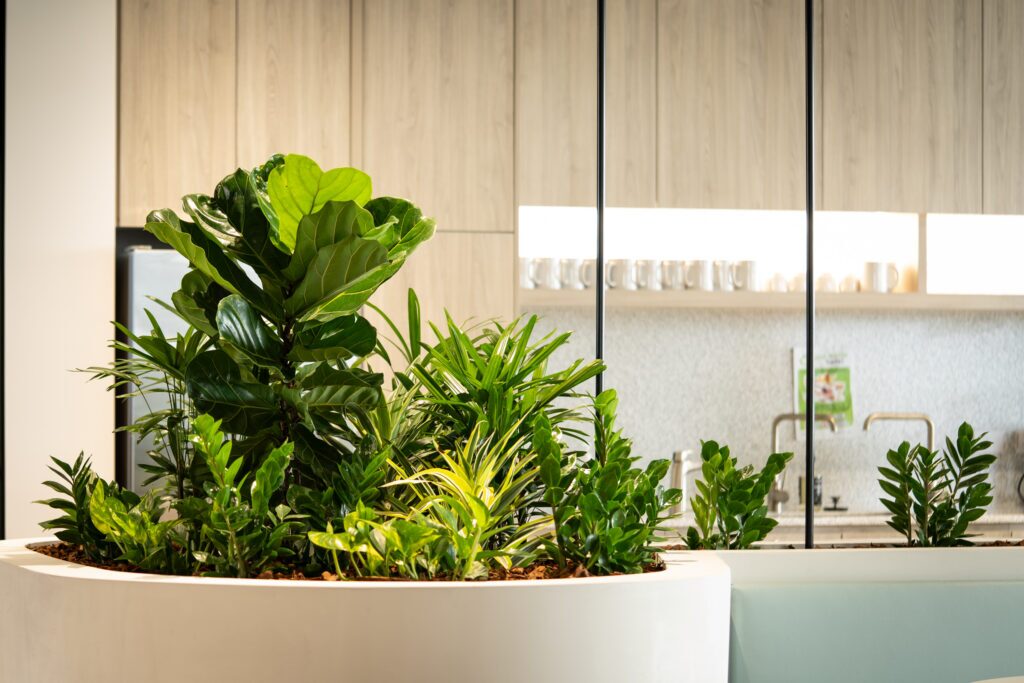
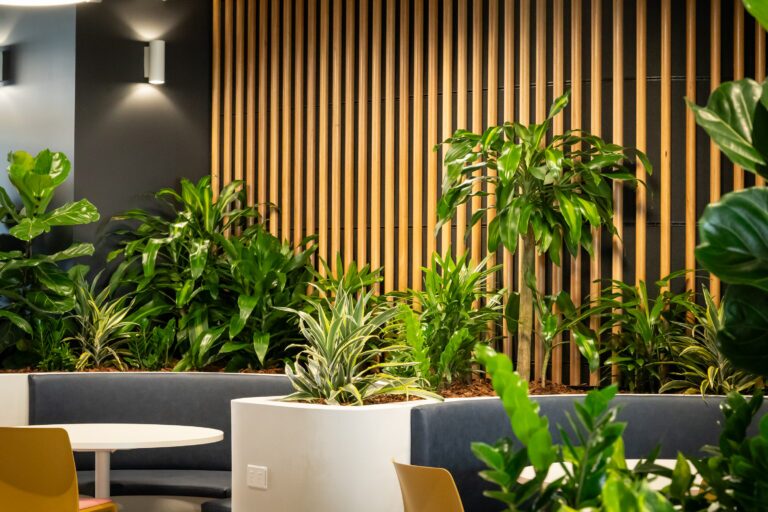
The Queensland default, and the look most of our hotel and shopping-centre clients ask for by name. Big glossy leaves, layered at different heights, so the planting reads as one lush mass rather than a row of pots. Odd-numbered groupings (threes and fives, never pairs if you can help it), deep greens with the odd splash of variegation, and something trailing over the edge of a trough or shelf.
Where it shines: receptions, atriums, hotel lobbies and breakout spaces with decent natural light. Lower-light rooms can still get the look by leaning on philodendron, aglaonema and peace lily, which cope with less sun than a fiddle leaf fig will.
Plants we reach for: kentia palm, bamboo palm, giant white bird of paradise, fiddle leaf fig, rubber plant, monstera, heart-leaf and Xanadu philodendron, peace lily, calathea and a hanging pothos or two.
Pots and topping: large smooth cylinders or bowls in white, charcoal or stone, finished with pine bark mulch so the foliage stays the hero.
Good to know: several tropical staples (philodendron, peace lily, monstera) are mildly toxic if chewed. In childcare centres, aged care homes and pet-friendly offices we build the same look from the safe lists in our childcare and aged care guides, and nobody can tell the difference.
2. Australian native
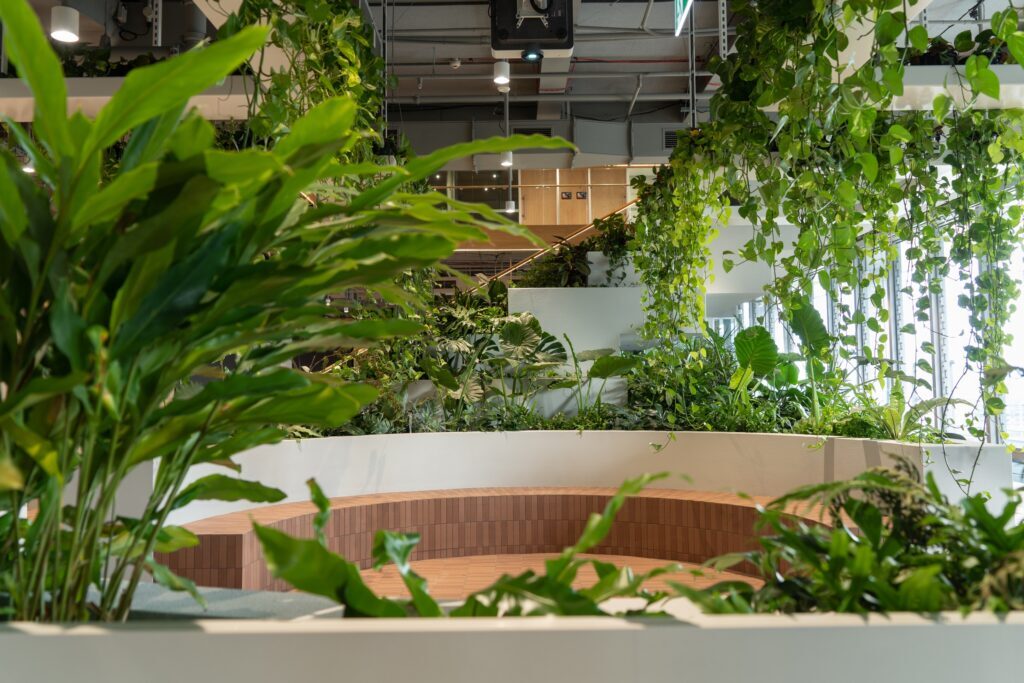
Softer, finer and unmistakably local. Indoors, this theme is less about bottlebrush and banksia (they want full sun and a breeze) and more about our rainforest and shade natives: ferns, lilly pilly, native violet and the palms that grow a few hours’ drive from our Albion nursery. Expect muted greens and silvers, upright forms paired with something that trails, and planters in earthy finishes.
Where it shines: organisations with a sustainability or reconciliation story to tell, government and university spaces, and any fit-out already using timber, stone and natural textures. It is also the theme we are asked for most often by clients working on a Reconciliation Action Plan.
Plants we reach for: kentia palm (a Lord Howe Island native, so it counts), walking stick palm, Australian tree fern, bird’s nest fern, kangaroo fern, sandpaper fig, umbrella tree, lilly pilly, native violet, and a Queensland bottle tree as a feature where there is light to spare.
Pots and topping: terracotta, charcoal, travertine and sandstone finishes with coconut fibre or pine bark mulch.
Good to know: most of this palette is low-allergen and a good chunk of it is safe around children and pets, which is why native themes turn up so often in childcare and aged care briefs. Our Queensland climate plant list is a good companion read.
3. Palm and desert
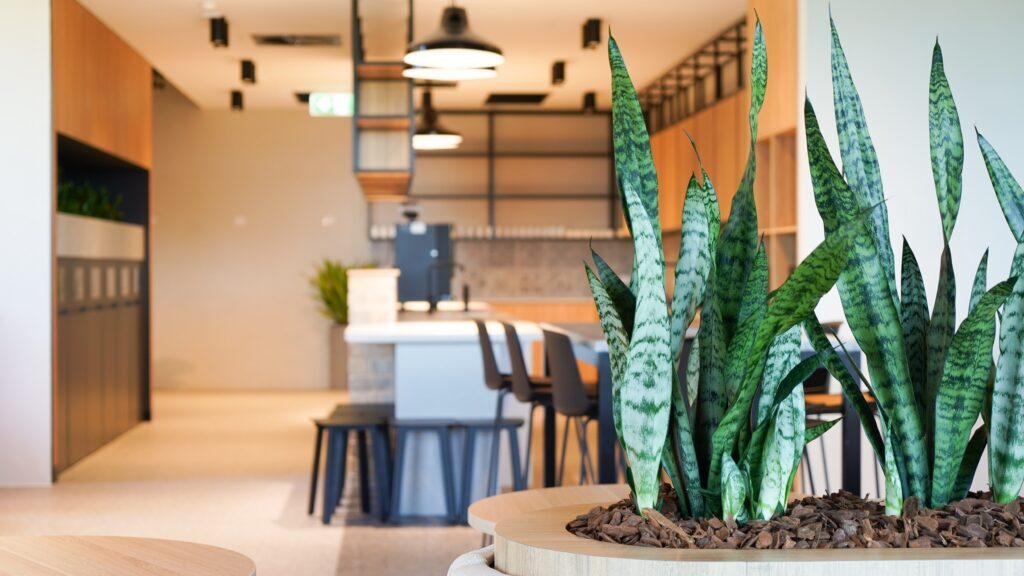
Sculptural and spare. A few strong silhouettes with air around them instead of a wall of green: a single tall palm, a cluster of snake plants in three heights, a ponytail palm against a plain wall, finished with pebbles rather than mulch. It suits warm, dry, brightly lit spaces and reads as considered rather than decorated.
Where it shines: bright north-facing offices, showrooms, concrete and polished-plaster fit-outs, and (this is the useful bit) spaces with strong air-conditioning, where softer tropicals dry out and sulk.
Plants we reach for: ponytail palm, yucca, snake plant (sansevieria) in several heights, zanzibar gem, dracaena, cycad, and aloe or larger succulents where the light allows. A kentia or bamboo palm gives you height without breaking the mood.
Pots and topping: tall cylinders and matte bowls in black, white or terracotta, topped with stones or pebbles.
Good to know: this is the most forgiving theme for a low-maintenance brief and the one we suggest first when a room is cold and dry. A few desert plants are spiky or mildly toxic, so aloe and yucca stay out of childcare and pet-friendly versions.
4. Modern minimal
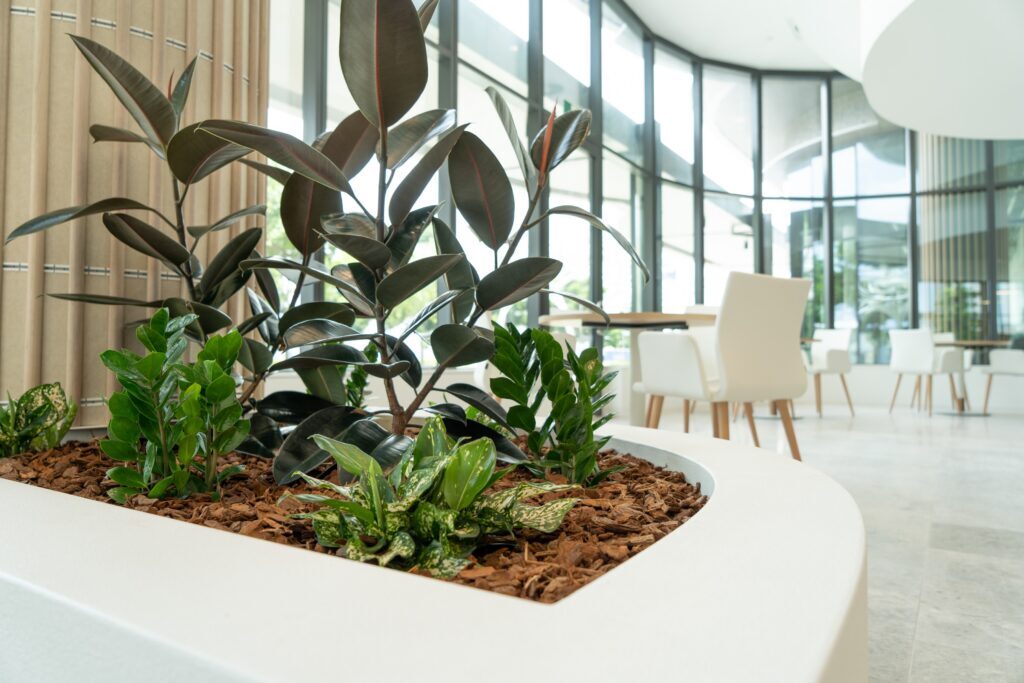
One plant, one planter, repeated with discipline. This is the look of law firms, financial services and design studios: matched planters in a single finish, one or two species used across the whole floor, and plenty of space between them. Form matters more than variety, so plants are chosen for a clean outline and kept the same size from the lift lobby to the far corner.
Where it shines: open-plan offices with long sightlines, boardroom corridors, reception desks, and anywhere the architect has handed you a very tight material palette and a look that says “do not add anything”.
Plants we reach for: fiddle leaf fig, burgundy or variegated rubber plant, kentia palm, zanzibar gem, snake plant, dracaena, and a peace lily on desks and tambour tops.
Pots and topping: gloss black or matte white cylinders, ribbed black, or custom joinery troughs between desks, with pine bark mulch or black mulch for a seamless base.
Good to know: repetition only works if every plant looks the same, so this theme leans on our fortnightly maintenance and free replacements more than any other. One tired fiddle leaf fig in a row of six is all anyone will see. Happily it is also the easiest theme to build from our Sprout range.
5. Japanese zen
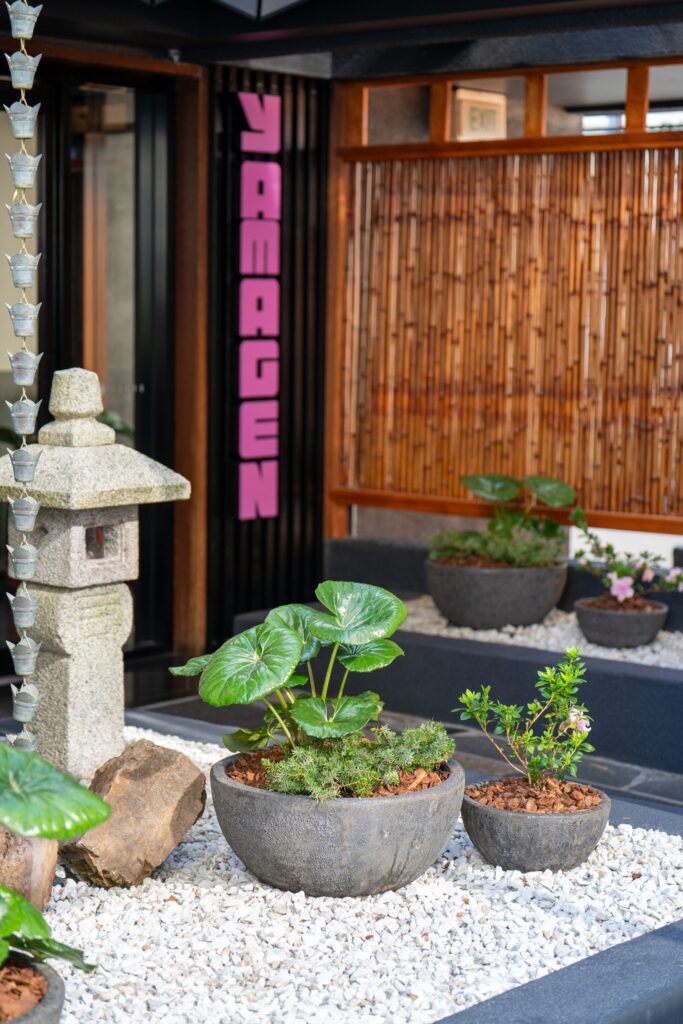
Calm, low and deliberate. Fewer plants, each one placed with intent, with moss, pebbles and a strong horizontal line doing a lot of the work. Indoors, the bamboo and maples of a true Japanese garden give way to plants that hold a shape: a clipped ficus, a moss bowl, a fern trailing over a low stone trough. Colour comes from texture and the planter rather than flowers.
Where it shines: wellness and medical practices, meditation and quiet rooms, Japanese and pan-Asian restaurants, spa and hotel corridors, and small spaces where a tropical mass would swallow the room.
Plants we reach for: ficus (Ginseng and clipped benjamina), moss and moss-scaping, bird’s nest fern, rhipsalis, ferns in low bowls, lucky bamboo, peace lily for a white accent and a small kentia for height.
Pots and topping: low stone or concrete troughs, shallow bowls, charcoal and grey finishes, topped with stones, pebbles or moss.
Good to know: moss and ferns like stable humidity, so this is the theme most upset by an air-conditioning vent blowing straight onto the planting. If you want to see what the look becomes at scale, our GDM moss-scaping project in Albion is the one to look at.
6. Layered biophilic
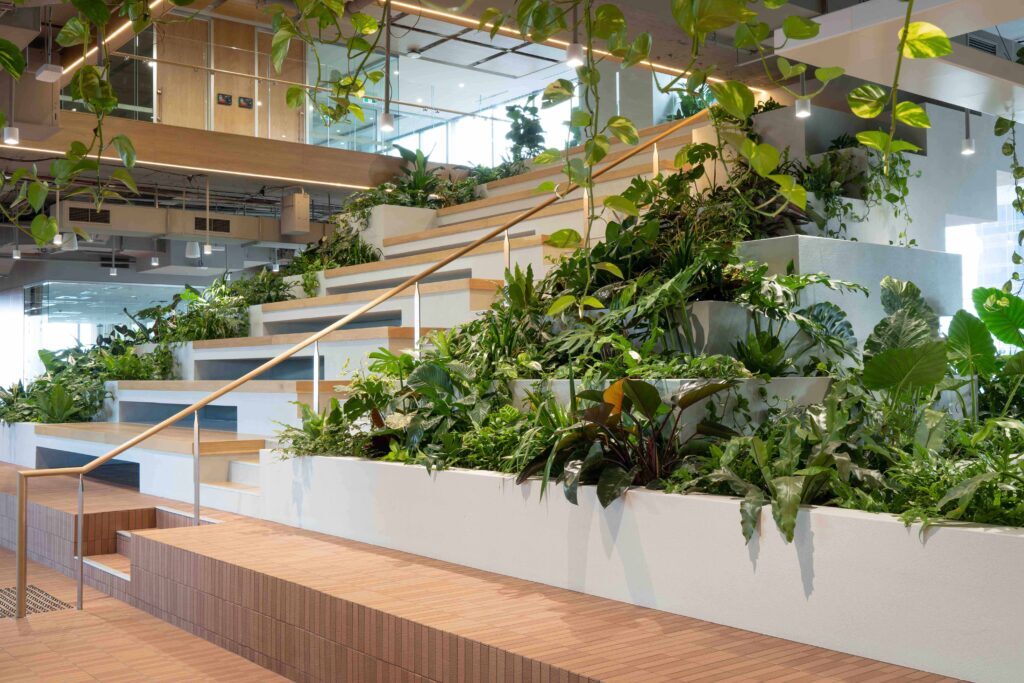
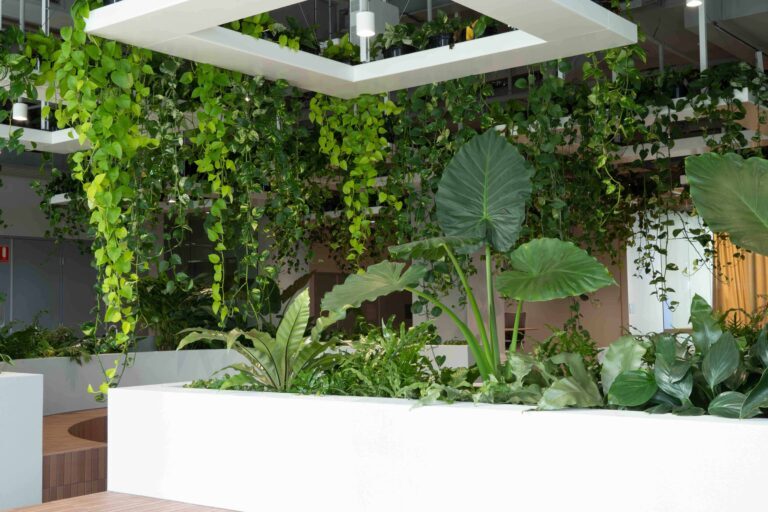
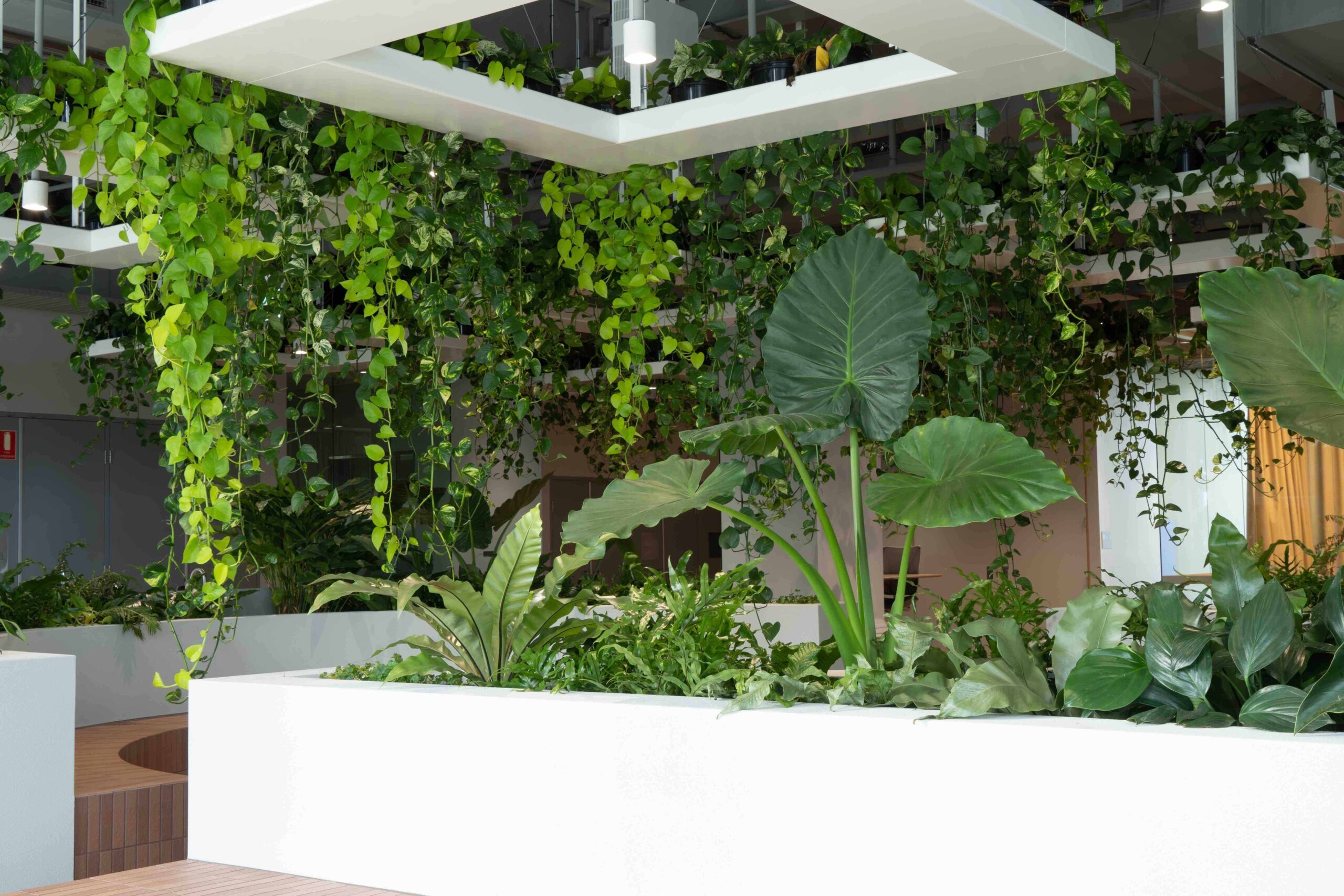
Less a style than a philosophy: planting at floor, desk, wall and ceiling level so there is something green in view from every seat. It borrows most of its plants from the tropical list, but the point is coverage and layering rather than any one leaf shape. Green walls, long runs of hanging pothos, planter-top storage between workstations and a statement tree at the lift lobby all belong here.
Where it shines: multi-floor corporate fit-outs chasing WELL or Green Star credits, campuses, and workplaces where wellbeing is part of the employer brand. Our Australian Retirement Trust project, with 2,000-plus plants across 14 floors, is this theme at full stretch.
Plants we reach for: the tropical palette plus green-wall staples (pothos, philodendron, peperomia, ferns, spathiphyllum), hanging heart-leaf philodendron, and statement kentias or giant birds of paradise at ground level.
Pots and topping: custom joinery troughs and dividers, planter-top tambour units, wall pots and hanging planters alongside the floor range. Topping varies by level.
Good to know: this is Flourish-package territory. Because plants sit at every level, light mapping matters: we survey each floor and move species around rather than forcing one list to work everywhere.
Okay, I have a favourite. What could change the plants?
Pick the look first and let the room decide the species. Four things change what we plant within any theme, and they are worth knowing before you fall for a photo on Pinterest.
Light. The big one. Bright natural light opens up fiddle leaf figs, birds of paradise and most natives; a room that relies on downlights narrows the list to the tolerant tropicals (aglaonema, zanzibar gem, snake plant, philodendron, peace lily). Tell us which rooms get sun and which do not, and we will do the rest.
Air-conditioning vents. Only a problem when a vent sits directly above a plant or blows straight onto it. That cold, dry stream browns leaf tips and dries out moss and ferns in a fortnight. Everywhere else in the room, air-conditioning is perfectly fine and most of our plants live happily in it.
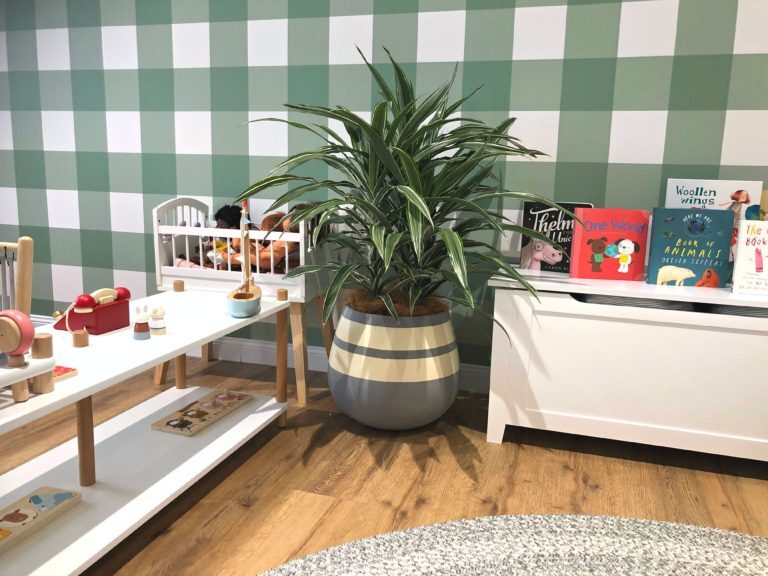
Children, pets and aged care. Takes philodendron, peace lily, zanzibar gem, dieffenbachia and a few others off the list. The look stays, the species change, and nobody needs another incident report in their life.
Allergies. Rules out heavy pollen producers in favour of smooth-leaved, low-pollen plants. Our allergy-friendly list covers the usual suspects.
If you are flexible on species, tell us the theme and let the designer choose. That is the version that still looks good in two years. If there is a plant you must have, say so and we will put it where it has the best chance, and be honest with you if the spot will not suit it.
Would you rather see it before you commit?
Fair enough. Our Room Viewer lets you drop real arrangements from our design quotes into a photo of your own reception, desk area or kitchen, pick a theme and a topping, note the light in each room, and send the whole plan to our designers with a weekly estimate attached.
From there we book a free site visit, check the light and the vents in person, and come back with a design and a firm price. Long-term hire runs on an 18-month term and installation is quoted separately once we have seen the space. If you only need plants for a conference, a launch or a wedding, our short-term plant hire team is the one to talk to.
Request pricing or call us on 1800 63 67 63. We would love to help you get past “green, but nice”.